5 Best Shadow Work Apps in 2026

We write about shadow work, Jungian psychology, and self-discovery.

The five best shadow work apps in 2026, ranked and compared: what each does well, where it falls short, and who it is for.
Shadow work is the practice of exploring your unconscious patterns, hidden behavioral habits, and repressed emotional responses. While a standard physical notebook is a timeless tool, modern digital applications offer structured frameworks, specialized trackers, and high-security settings to help you map your psychology.
If you want to move past vague journaling and actively track your behavioral triggers, here are the five best shadow work apps available in 2026, ranked by performance.
1. Bayun
Best for Guided Shadow Work
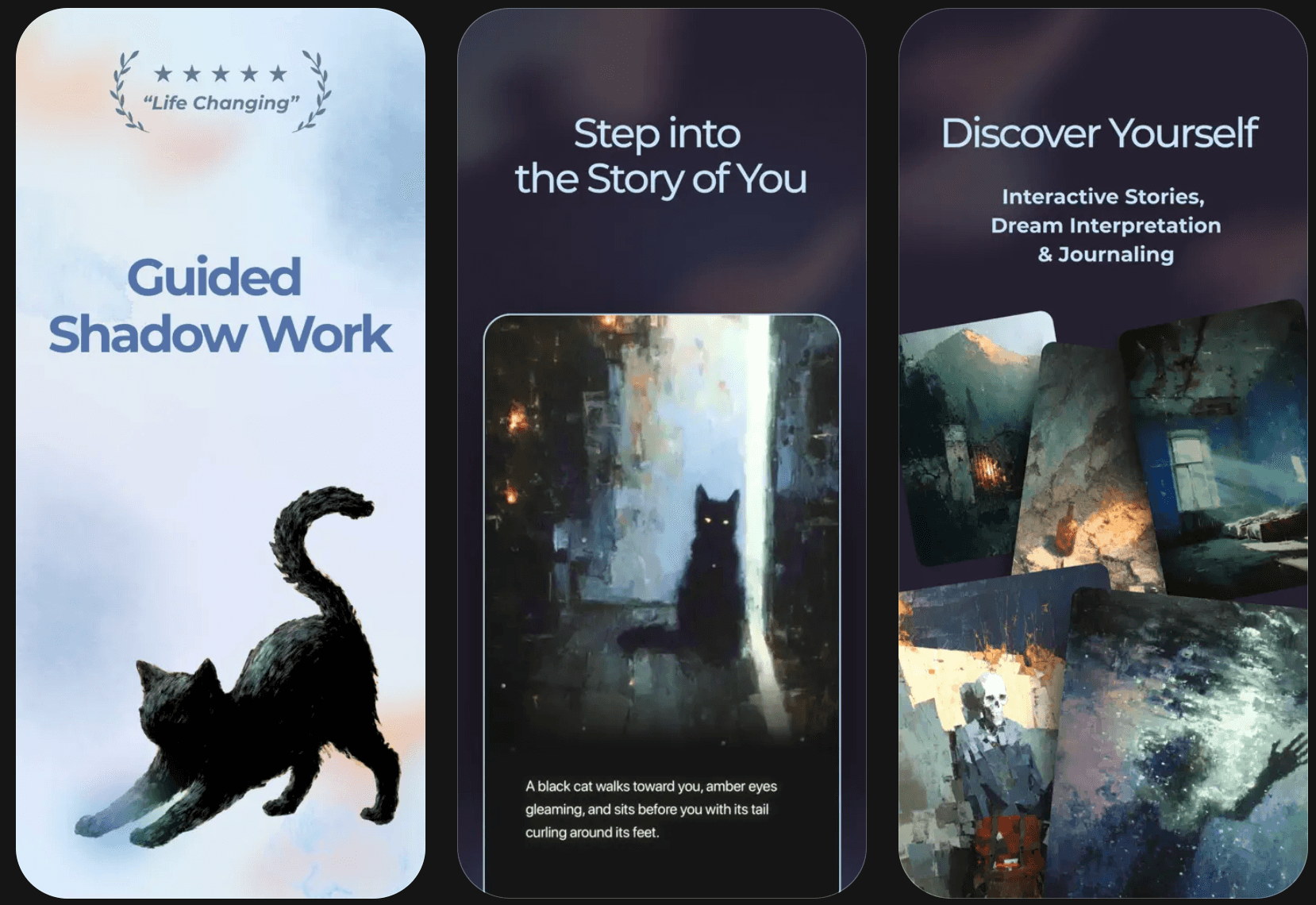
Best for: Curious minds looking to understand themselves better and interpret dreams. It is for anyone wanting to explore their patterns through interactive stories instead of standard journaling tools.
Platforms: iOS
Price: Free · $5.99/month · $29.99/year
Why it works: Bayun completely avoids traditional diary formatting. It uses narrative-driven stories and dream interpretation rooted in Jungian psychology to help you uncover your hidden personal traits and behavior patterns. I created it out of an obsession with Jungian psychology and an immense love for this craft.
Key features
- Choose-your-own-adventure stories
- Dream interpretation
- Audio guided visualization
- Guided journaling
- Spirit animal test
- AI guided reflection
- Personalized insights
Pros: Highly engaging, with daily stories for self-reflection that are deeply rooted in genuine Jungian shadow work.
Cons: Limited to the Apple ecosystem, and it lacks a completely blank, open-form text canvas.
2. Stoic
Best for Grounded Routines
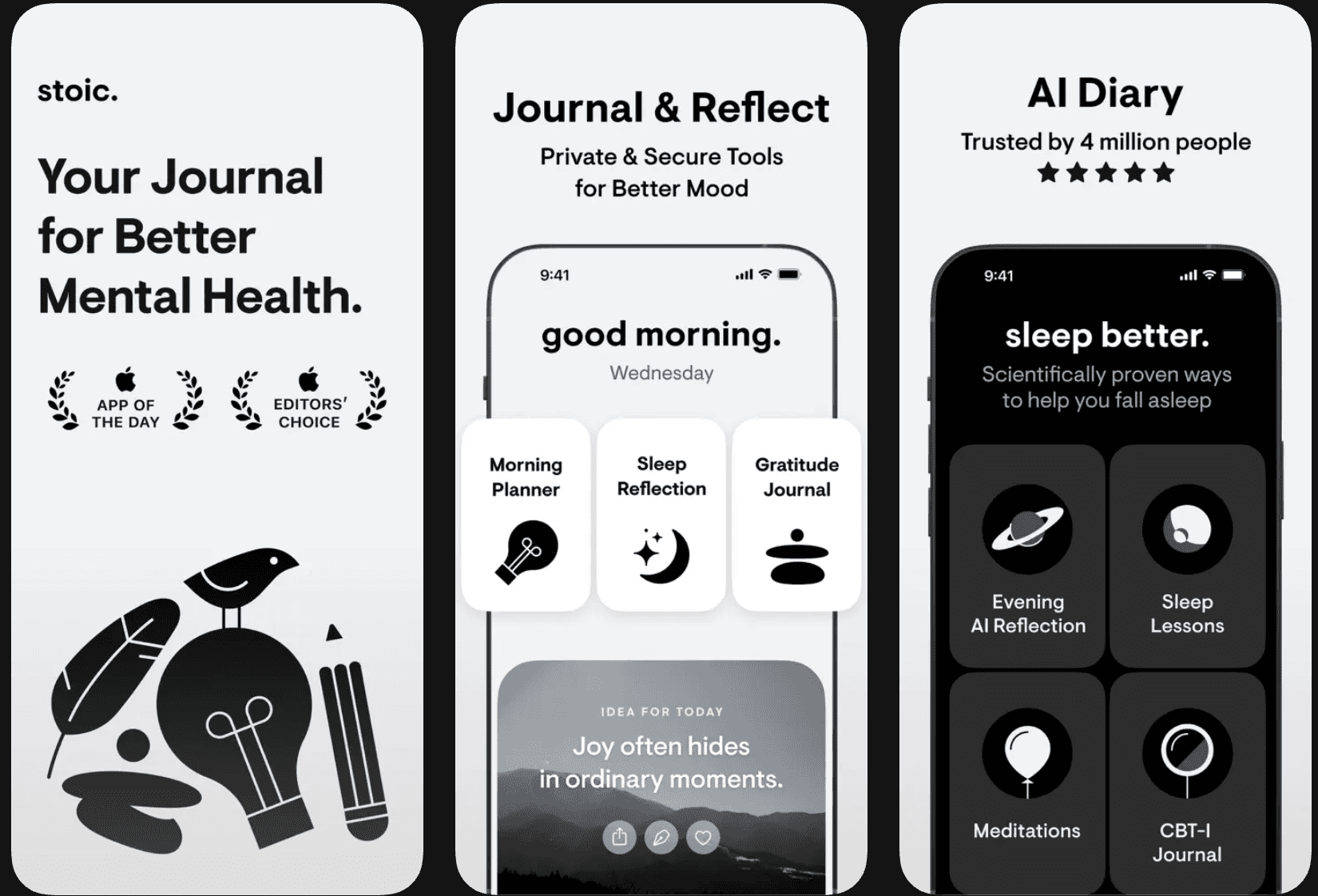
Best for: Data-minded individuals who want to track morning and evening routines, find trends in emotional triggers, and use structured prompts to build better habits.
Platforms: iOS, Android
Price: Free · $12.99/month · $99.99/year
Why it works: Stoic uses a split routine structure to help you prepare in the morning and reflect in the evening. It provides specialized templates like dream and nightmare journals, CBT-based thought dumps, and mental health tools to track the metrics that matter to you.
Key features
- Morning preparation and evening reflection
- CBT-based thought dumps
- Dream and nightmare journal
- Meditation and breathing exercises
- Therapy notes tracker
- Stoic Shield app blocker
- Trends and metrics visualization
Pros: Comprehensive mental health toolkit combining journaling, habit tracking, and biometric privacy.
Cons: Advanced tracking analytics and AI-powered tools require upgrading to the highest subscription tier.
3. Mindberg
Best for Clinical Depth Psychology
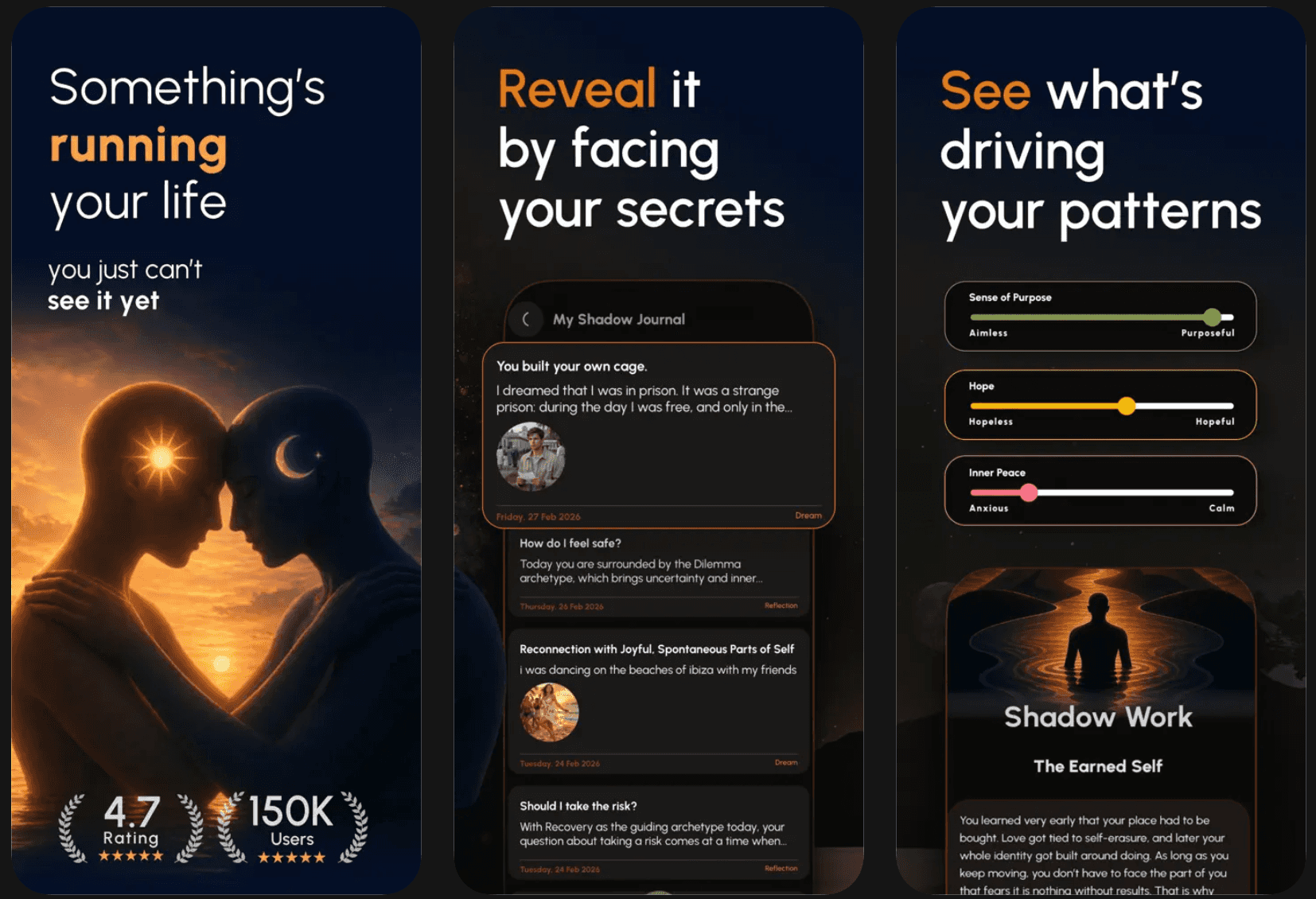
Best for: People on a deep healing journey who want to stop repeating destructive relationship habits, process emotional wounds, and uncover the real answers hiding in their unconscious mind.
Platforms: iOS, Android
Price: Free · $24.99/month · $99.99/year
Why it works: Mindberg skips surface-level personality labels and focuses on depth psychology. It targets the root source of your behavior to support you through trauma, inner child healing, and identity crises. The app was created by a Jungian psychotherapist accredited by the C.G. Jung Institute Zürich, making it highly authoritative.
Key features
- Guided shadow work sessions
- Prompts for shadow exploration
- Relationship pattern tracking
- Dream analysis and dream journal tools to uncover recurring symbols
- Trauma and emotional wound support
- Inner child healing tools
- Reflection tools that connect behavior to deeper patterns
Pros: Deeply rooted in genuine Jungian psychology, with structured workflows built for serious trauma and shadow integration.
Cons: The heavy psychological focus and clinical framework can feel overwhelming if you are looking for a casual or light mood tracker.
4. Rosebud
Best for Conversational AI
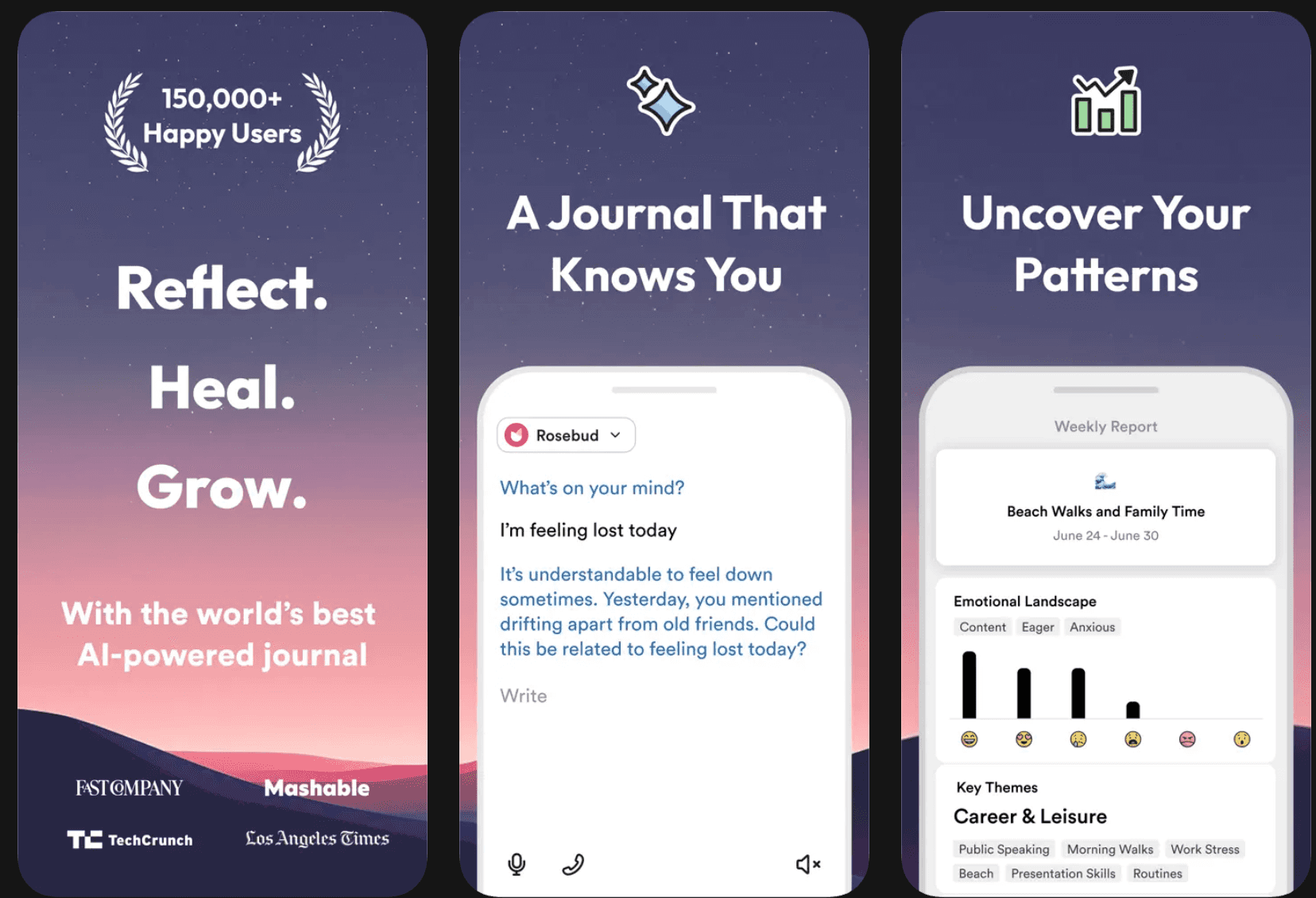
Best for: Journalers navigating challenging emotions like stress, anxiety, or overthinking who want an AI self-care companion to provide interactive, personalized feedback.
Platforms: iOS, Android, Web
Price: Free · $12.99/month · $107.99/year
Why it works: Rosebud operates as a therapist-recommended journaling tool that evolves with you. Instead of an unguided blank page, it functions like a personal coach that learns from your previous entries over time to help you reframe negative emotions, spot thinking traps, and gain mental clarity.
Key features
- Interactive daily diary with real-time guidance
- Voice journaling with advanced transcription in 20 languages
- Expert-crafted experiences (CBT techniques, gratitude practice)
- Intelligent pattern recognition across past entries
- Smart mood tracker for emotional triggers
- Weekly personal growth insights and analysis
- Smart goal tracker and habit suggestions
Pros: Highly dynamic, conversational flow that acts as a collaborative reflection partner and makes you think through things you might normally avoid.
Cons: Not suitable for people who prefer to reflect privately without an AI reading, processing, or responding to their text.
5. Opal Journal
Best for Guided Journaling
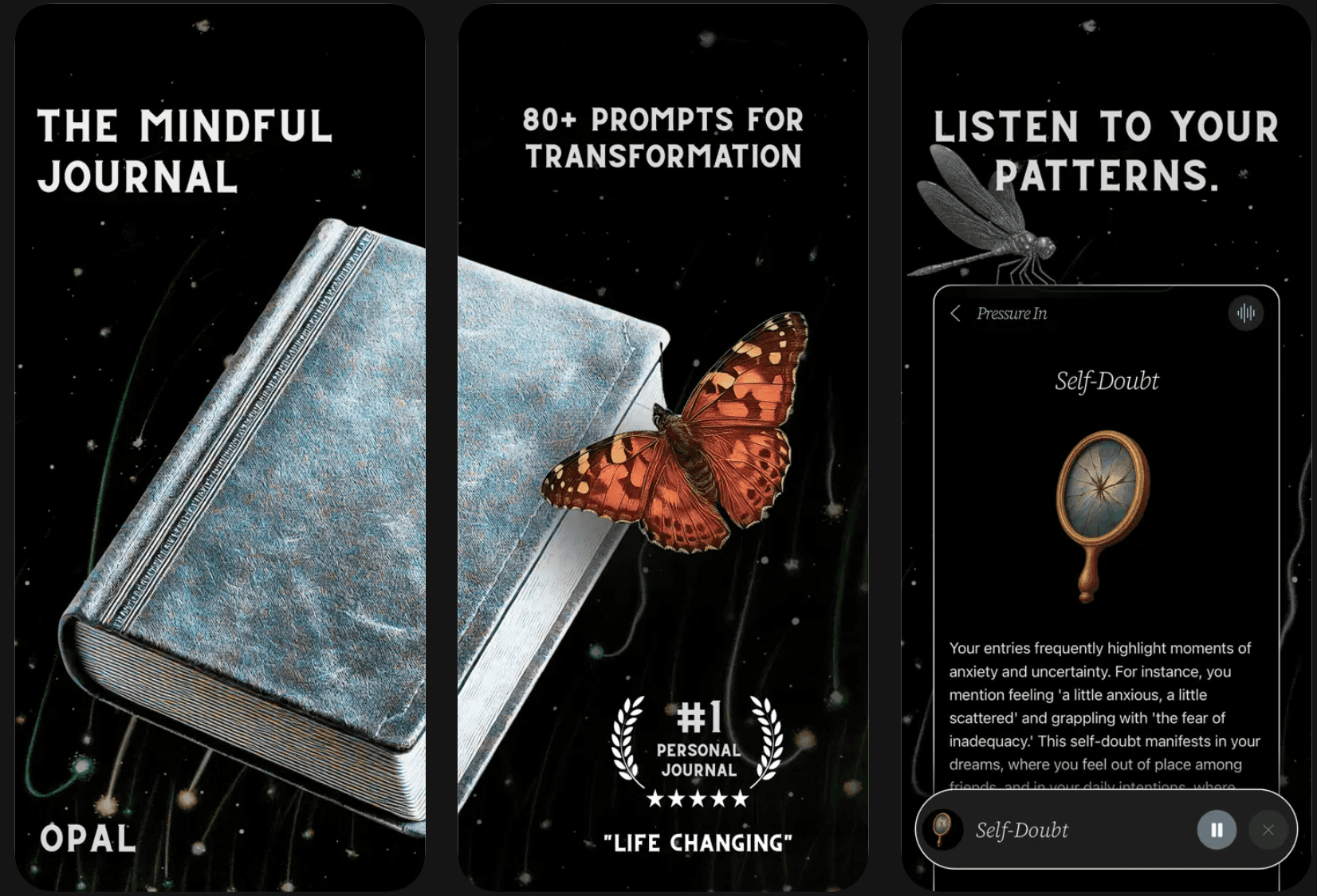
Best for: Journalers looking for a quiet, private space to follow multi-day programs built around themes like manifesting, intention-setting, shadow work, and dream interpretation.
Platforms: iOS
Price: Free
Why it works: Opal is designed around the core idea that the more you write, the more you understand. It turns a blank page into a mirror using thoughtful prompts, ambient soundscapes, and AI reflections that highlight what your conscious mind might miss, all while keeping your data private with no cloud sync by default.
Key features
- Multi-day guided journeys and programs
- Multiple journals to keep threads separate
- Voice journaling and image entry support
- Ambient soundscapes
- AI reflections for recurring themes and cognitive distortions
- Local device storage with no account required
- Meditations, affirmations, and full moon tracking
Pros: Beautifully designed, completely free workspace that deeply prioritizes user privacy.
Cons: Not suitable for people who struggle to maintain a consistent writing habit or simply do not enjoy long-form journaling.
In Conclusion
Most modern approaches put an overly negative focus on inner work and capitalize on fear. It is constantly framed around dark, destructive concepts, but these perspectives fail to understand that the unconscious is also the matrix of our creative potential, our gifts, our talents, and everything we are meant to become.
Carl Jung used to say that most people live lives that are too small, and that this narrow existence is the main source of their hardships and lack of meaning. The true individuation journey involves having the courage to find our own answers and face our fears.
FAQ
- What is the best app for shadow work?
- Bayun and Mindberg are the best apps for shadow work because they are directly designed around genuine Jungian psychological frameworks. Bayun is ideal if you prefer narrative, story-driven self-exploration, while Mindberg works best if you require a clinical approach focused on deep processing and dream analysis.
- Is there a free shadow work app?
- Yes. Opal Journal is completely free with zero hidden tiers or required subscription barriers. Apps like Stoic and Rosebud also offer excellent, functional free plans that work beautifully for daily pattern mapping.
- Can I do shadow work with a journaling app?
- Yes, journaling is one of the most effective methods for shadow work. Writing bypasses the ego's defenses and surfaces unconscious material. The key is using structured prompts or dynamic tracking that goes beyond surface-level mood reflection.
- Is shadow work safe to do alone?
- Gentle shadow work, such as noticing triggers, exploring patterns, and journaling about emotions, is generally safe to do alone with app support. However, if you have a trauma history or shadow work surfaces overwhelming emotions, you should work alongside a certified therapist trained in depth psychology.
- How long does shadow work take?
- Shadow work is an ongoing practice, not a one-time fix. You will likely notice structural shifts within four to eight weeks of consistent journaling, but deep behavioral integration happens over months and years. The shadow does not disappear; you simply develop a more conscious relationship with it.
- What's the difference between shadow work and therapy?
- Shadow work is a personal practice of deep self-exploration that can be managed independently or supported by tools. Therapy provides licensed professional clinical guidance, a crisis safety net, and evidence-based processing for trauma. Many people use apps for their daily routines alongside active therapy sessions.
Related
What Is Shadow Work?
Shadow Work8 min readWhat Your Dreams Are Trying to Tell You
Dreams7 min readThe Wisdom in Stories
Stories7 min read