Jung and the Tarot

We write about shadow work, Jungian psychology, and self-discovery.
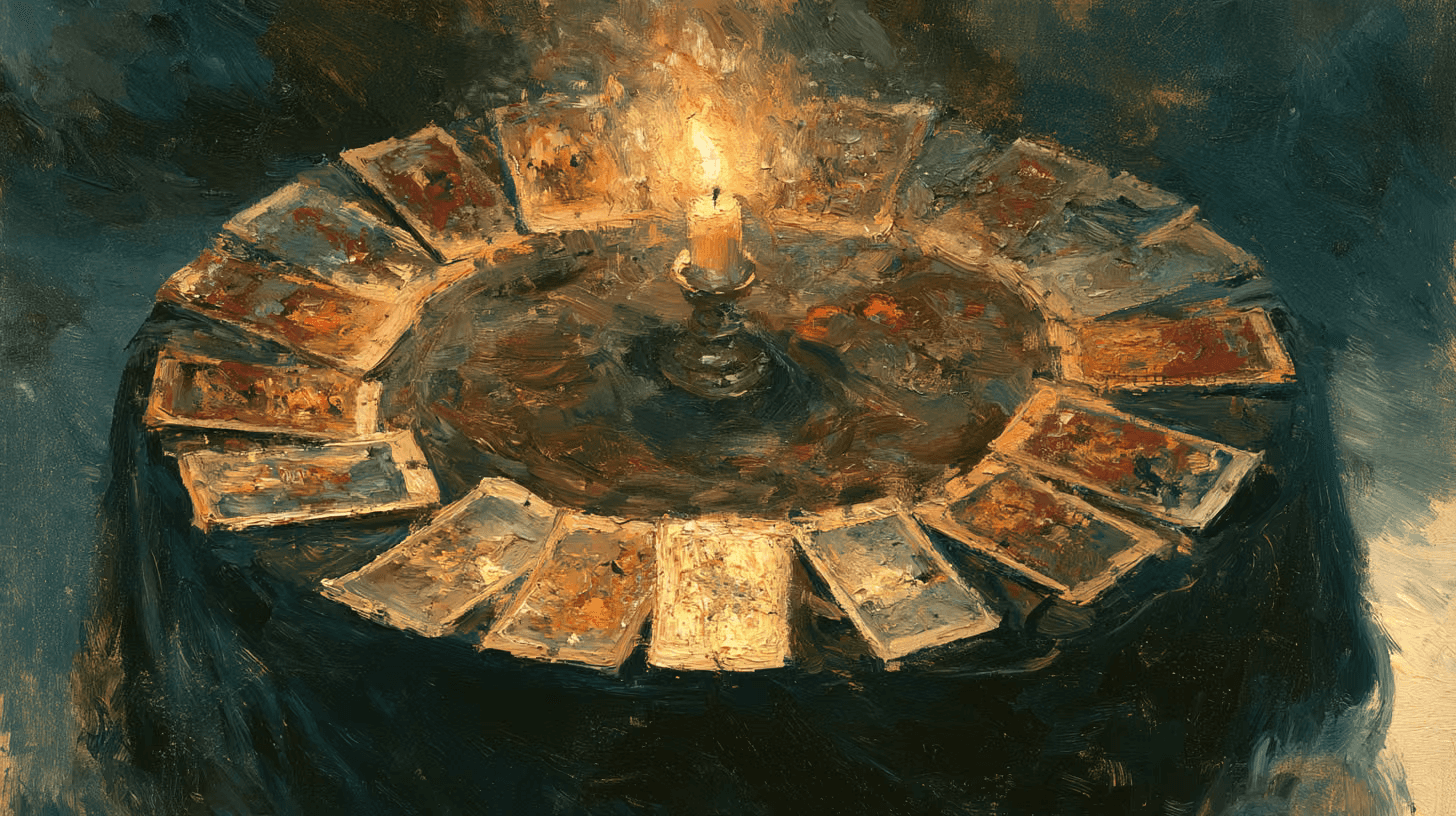
Tarot began as a card game and became a fortune-telling tool. Jung saw a third thing in the same pictures: archetypes of transformation you can recognize yourself in.
A Card Game From Italy
Tarot was born in the courts of 15th-century Italy, where noble families had decks painted by hand and trimmed with gold. They weren't used for fortunes. People played with them, the way we play cards today.
The game is still played in parts of Europe, but over time the pictures became more famous than the game.
Major and Minor Arcana
A tarot deck has 78 cards. Most of them, the Minor Arcana, come in four suits, cups, coins, swords, and wands, and look a lot like a regular deck of playing cards.
The other 22 are the Major Arcana, and they're the ones people remember. Each has a name and a striking image: the Fool, the Lovers, Death, the Moon, the World.
From Game to Fortune-Telling
For about three hundred years, tarot stayed a game. Then in the late 1700s, French occultists claimed the picture cards held the lost wisdom of ancient Egypt, and tarot became a tool for reading the future.
Most people still know it that way. Jung saw something different in the same images.
Symbols to Play With
In a 1933 seminar, Jung described the tarot as a set of psychological images, symbols people play with. He placed it alongside the I Ching as a way of letting the unconscious show itself through pictures.
He also noticed how closely the cards echo alchemy. The Devil, for example, is drawn as a figure both male and female, the same union of opposites the alchemists linked with gold.
A Journey in 22 Cards
In his writing on archetypes, Jung traced the tarot's pictures back to the archetypes of transformation, the patterns that surface when a person goes through deep inner change.
Laid out in order, the Major Arcana tell that story. The Fool sets out with nothing. The Hermit withdraws to search alone. Death clears away the old life, the Tower brings down false structures, and the World closes the circle with a self made whole.
A Mirror for the Psyche
Seen this way, a card works the way a dream image does. It points inward, toward something already moving beneath the surface, and gives it a face you can recognize.
The Fool, the Hermit, and the Tower have outlasted the game that created them because people keep finding themselves in these figures. Each card holds a pattern that has always been part of us.
"A journey through the Tarot cards is primarily a journey into our own depths. Whatever we encounter along the way is au fond an aspect of our own deepest self." — Sallie Nichols
FAQ
- What did Jung say about tarot?
- In a 1933 seminar, Jung described the tarot as a set of psychological images, symbols people play with. He placed it alongside the I Ching as a way of letting the unconscious show itself through pictures.
- What is the difference between the Major and Minor Arcana?
- A tarot deck has 78 cards. The 56 Minor Arcana come in four suits (cups, coins, swords, and wands) and resemble playing cards. The 22 Major Arcana each have a name and a striking image, such as the Fool, the Lovers, Death, the Moon, and the World.
- How do the Major Arcana relate to archetypes?
- Jung traced the tarot’s pictures back to the archetypes of transformation, the patterns that surface when a person goes through deep inner change. Laid out in order, the Major Arcana tell that story, from the Fool setting out with nothing to the World closing the circle.
Related
The Language of Symbols
Symbols3 min readAlchemy and Jung: Turning Lead Into Gold
Symbols4 min readWhat Is Shadow Work?
Shadow Work8 min read