The Language of Symbols

We write about shadow work, Jungian psychology, and self-discovery.
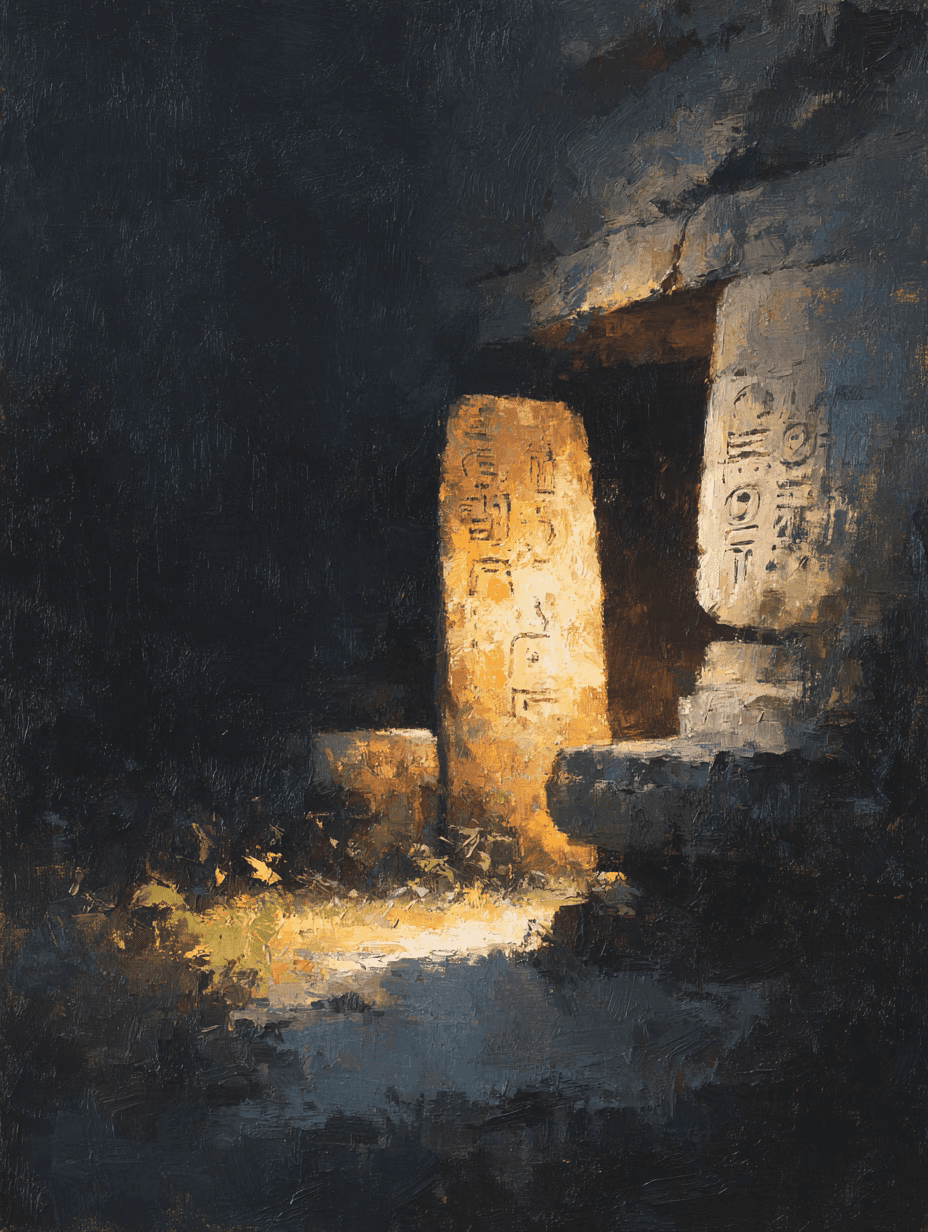
A symbol points toward something felt and not yet fully understood. Here is why Jung called symbols a bridge to the unconscious, and how to work with one.
The Language of Symbols
Long before written language, humans carved images into cave walls and shaped them into tools and objects. These images were ways of expressing something that couldn't be spoken directly.
A symbol carries meaning that goes beyond what words can capture. A sign points to something already known, but a symbol points toward something felt and not yet fully understood. It speaks to the part of you that dreams, that responds to myth, that recognizes meaning in an image before the mind can explain why.
A Bridge to the Unconscious
Jung described symbols as a bridge between the conscious mind and the deeper layers of the psyche. They surface when something inside you is trying to be known, whether through a recurring dream image, a story that won't leave you alone, or a piece of art that stops you mid-step.
Symbols appear across every culture and every era of human history. The psyche naturally expresses itself through images. They are its native language.
"When the soul wants to experience something, she throws out an image in front of her and then steps into it." — Meister Eckhart
Holding Opposites Together
When you step into a symbol, what you find there often holds contradictions. Fire is warmth and destruction. Water is life and drowning. A snake is healing and danger. The rational mind wants to choose one, but the symbol holds both at once.
When a symbol moves you, something in the unconscious recognizes itself in the image. You might not be able to say why it matters. That pull, that quiet charge, is worth paying attention to.
Sitting With a Symbol
When you feel that charge, it's natural to want to look up what a symbol "means" and move on. But symbols can't be reduced to definitions. Jung was once asked for advice by someone planning to publish a dictionary of symbols, and he said not to. Each symbol, he felt, would need an entire book.
Try staying with the image for a while instead. Notice what feelings come up, what memories surface, what it reminds you of. The meaning of a symbol isn't something you figure out. It tends to unfold on its own when you sit with it long enough.
Symbolic images are vital seeds, living carriers of possibility. A symbol that is still alive remains partially unknown, and continues to unfold in new meanings the longer you stay with it.
FAQ
- What is a symbol in Jungian psychology?
- A symbol carries meaning that goes beyond what words can capture. A sign points to something already known, but a symbol points toward something felt and not yet fully understood.
- Why did Jung call symbols a bridge to the unconscious?
- Symbols surface when something inside you is trying to be known, through a recurring dream image, a story that will not leave you alone, or a piece of art that stops you mid-step. They connect the conscious mind to the deeper layers of the psyche.
- How do you work with a symbol?
- Stay with the image instead of looking up a definition. Notice what feelings come up, what memories surface, and what it reminds you of. The meaning tends to unfold on its own when you sit with it long enough.
Related
Alchemy and Jung: Turning Lead Into Gold
Symbols4 min readJung and the Tarot
Symbols4 min readWhat Is Shadow Work?
Shadow Work8 min read