The Self in Jungian Psychology

We write about shadow work, Jungian psychology, and self-discovery.
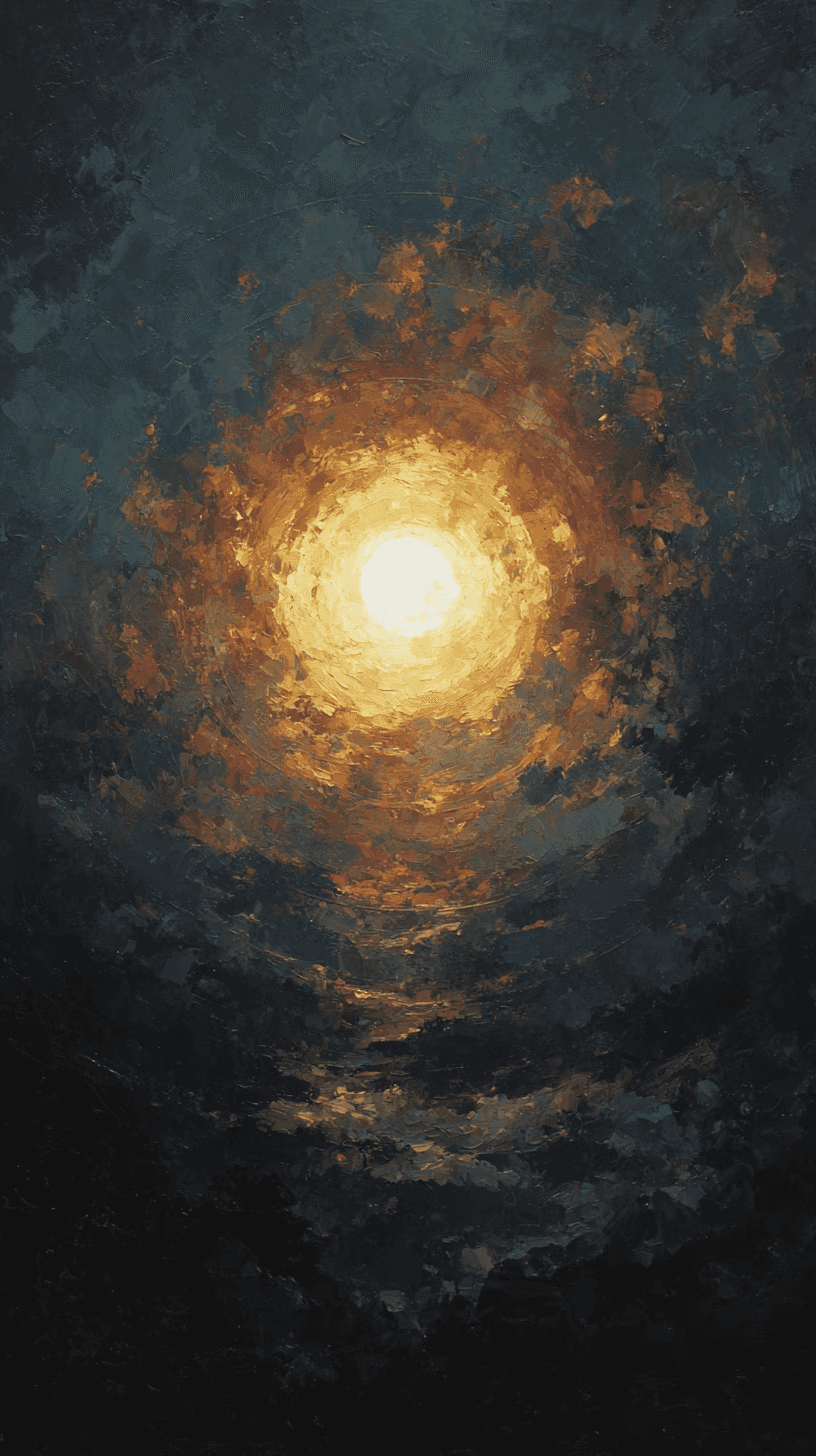
The Self is where Jung’s road leads, past the persona, the shadow, and the inner figure beneath them. Here is what it is, how it differs from the ego, and how it appears as a circle in dreams.
Not the Ego
The Self, in Jung's sense, isn't the part of you that says "I." That part is the ego, the centre of your conscious mind, and it's only a fraction of the whole.
Jung put the Self at the centre of the entire psyche, the way the sun sits at the centre of the solar system. Everything conscious and unconscious in you belongs to it. The ego, your waking sense of "I," is more like a single planet circling that centre, whether or not it ever notices what it’s orbiting.
Where the Road Leads
For Jung, becoming whole was the work of a lifetime, and the Self was its destination. The figures you meet earlier are stages on the road toward it: first the persona you show the world, then the shadow you’d rather not own, then the inner man or woman beneath that.
The Self lies deeper than any of them. Moving toward it means making more and more of the unconscious conscious, until your small waking "I" is no longer running things on its own. Jung was clear that you never fully arrive. It’s a direction you keep moving in for life.
The Circle in the Dream
The Self doesn't speak in words. It tends to announce itself in images of wholeness, and the one Jung met again and again was the mandala, a circle organized around a centre.
He found these patterns surfacing in the dreams of people who had never heard the term, and in the sacred art of Hinduism, Buddhism, and Christianity alike. They turned up most often when someone's life had fallen into confusion, as if the psyche were reaching for a centre to hold itself together.
A Centre That Holds
Jung described living closer to the self as a growing sense of harmony, inside yourself and with the world around you, as the parts that were at war start to settle.
He didn't reach for small words about it. He called the Self a treasure that makes a person hard to push around, and a link to the infinite. It's the closest Jung came to saying what all the inner work is finally for.
"The self is our life’s goal, for it is the completest expression of that fateful combination we call individuality." — C.G. Jung
FAQ
- What is the Self in Jungian psychology?
- Jung put the Self at the centre of the entire psyche, the way the sun sits at the centre of the solar system. Everything conscious and unconscious in you belongs to it.
- What is the difference between the ego and the Self?
- The ego is the centre of your conscious mind, the part that says "I," and it is only a fraction of the whole. The Self is the centre of the entire psyche, conscious and unconscious.
- What does the mandala mean to Jung?
- The Self tends to announce itself in images of wholeness, and the one Jung met again and again was the mandala, a circle organized around a centre. These patterns turned up most often when someone’s life had fallen into confusion.
Related
What Are Jungian Archetypes?
Jungian Psychology7 min readThe Persona Archetype
Jungian Psychology4 min readThe Shadow Archetype
Jungian Psychology4 min read